


Bio2AgroFood PROJECT
Utilization of Sustainable Biotechnology in the Agricultural an Food Sector

Microalgae on a petri dish
Picture: Algatech

Microalgae extracts
Picture: Melanie Wallner

Bread with microalgae
Picture: Melanie Wallner
The Interreg project Bio2AgroFood (2025-2027) focuses on the application of microalgae in food, feed and regionally important crop production. This cross-boarder research project profits from the expertise and knowledge of the Institute of Microbiology (MBU, Trebon, Czech Republic), the University of Applied Sciences Upper Austria (Wels, Austria) and the Austrian Competence Centre for Feed and Food Quality, Safety and Innovation (FFoQSI, Tulln).
The project aims to find new solutions for the production of functional foods and feeds by regional companies, and for the use of microalgae in the production of biostimulants/biocides for crops, such as wheat, barley and poppy. Additionally, the project should strengthen collaboration among partners, thereby increasing regional competitiveness in research and development.
Food companies are interested in new functional foods enriched with sources of polyunsaturated fatty acids (PUFAs), particularly omega-3 fatty acids, which are deficient in diets. Additionally, feed producers demand products that improve lifestock health and performance by improving intestinal health and its microbiota. As there is growing demand for natural sources of biostimulants/biocidals among farmers, the project also addresses the application of microalgae for the cultivation of regionally important crops, like wheat, barley and poppy.
Microalgae are a valuable group of microorganisms producing substances relevant in human and animal nutrition, as well as agriculture. Among these, polyunsaturated fatty acids (PUFA) and pigments such as lutein are of particular interest both in food and feed production. In addition, further primary and secondary algae metabolites have the potential to exert prebiotic, anti-inflammatory, and intestinal barrier strengthening effects. Similarly, certain microalgae strains have been shown to produce phytohormones and antimicrobial components, making them interesting candidates for the production of biostimulants and biopesticides. While the effects of these substances have been scientifically described, the technologies for their extraction and processing for practical, commercial use remain underdeveloped.
The project outcomes include new or improved cultivation technologies, biomass processing, and the utilization of valuable compounds, described through Standard Operating Procedures (SOPs) and demonstrated by functional samples. These technologies will be developed through joint research and development and tested in real-world environments in collaboration with SMEs. At the end of the project, the results will be immediately available for commercialization under the principles of the GBER and the EU Framework on State Aid for Research and Development (see annex) without additional legislative restrictions.
Project Information
- Registration Number: ATCZ00171
- Project Provider: Interreg AT-CZ 2021–2027
- Years: 2025–2027
- Total Grant (€): 764,773.53
Project Partners
- Institute of Microbiology CAS, v. v. i. – Centre Algatech, Třeboň (Leading partner)
- FH OÖ Forschungs & Entwicklungs GmbH, Wels
- Austrian Competence Centre for Feed and Food Quality, Safety & Innovation (FFoQSI), Tulln

Lead Researcher: 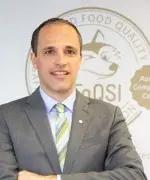
FH-Prof. Priv.-Doz. Dr. Julian Weghuber
FFoQSI Area Leader GREEN
Head of Department
Food Technology and Nutrition, University of Applied Sciences Upper Austria
julian.weghuber@fh-wels.at
+43 5 0804 44403
www.fh-ooe.at
Project Leader:

Melanie Wallner MSc
Bio2AgroFood Project Coordinator & Research Associate
melanie.wallner@ffoqsi.at
+43 5 0804 48859
www.ffoqsi.at